Many startups, freelancers, and personal brands struggle with the same challenge: they know they need a stronger brand, but they are unsure whether to focus on brand messaging or brand positioning.
The confusion is understandable because these two concepts are closely connected. However, they are not the same thing.
In fact, many businesses invest heavily in content, social media, and website copy before establishing a clear position in the market. The result is often inconsistent communication, weak differentiation, and messaging that sounds similar to competitors.
Understanding the difference between brand messaging and brand positioning can help businesses create stronger customer connections, improve marketing effectiveness, and build long-term trust.
Whether you are building a startup in Pakistan, launching a personal brand, or growing an online business globally, understanding these fundamentals can give you a significant competitive advantage.
Table of Contents
ToggleSection -02
Why This Distinction Matters
The modern consumer is exposed to thousands of marketing messages every day. Research in consumer psychology consistently shows that people make decisions faster when they clearly understand what a brand stands for and why it matters to them.
Many brands fail not because they offer poor products or services, but because their audience cannot clearly understand:
- What the brand does
- Who it serves
- Why is it different
- Why it can be trusted
This is where positioning and messaging work together.
Think of brand positioning as the strategy.
Think of brand messaging as the communication.
Without strategy, communication becomes confusing.
Without communication, strategy remains invisible.
Related: Why do most of the brands sound the same, and how to avoid it
Section – 03
What is Brand Positioning?
Brand positioning refers to the unique place a brand occupies in the minds of its audience.
It defines:
- Who you serve
- What problem you solve
- What makes you different
- Why customers should choose you
Positioning focuses on perception.
The goal is to create a clear and memorable identity that separates your brand from competitors.
Example of Brand Positioning
Imagine two content writers.
Writer A says:
“I provide content writing services.”
Writer B says:
“I help startup founders turn complex ideas into clear content that builds trust and attracts customers.”
The second example immediately creates a stronger position because it identifies:
- A specific audience
- A specific outcome
- A unique value proposition
That is positioning.
Section – 04
What Is Brand Messaging?
Brand messaging is the language used to communicate your positioning.
It includes:
- Website copy
- Social media content
- Email campaigns
- Taglines
- Value propositions
- Marketing messages
Messaging translates strategy into words.
If positioning answers:
“Why should people choose us?”
Messaging answers:
“How do we communicate that value consistently?”
Example of Brand Messaging
Using the previous example, a startup-focused content writer might use messaging such as:
- Content that builds trust before selling
- Clear messaging for growing startups
- Helping founders explain what makes them different
These statements support the underlying positioning.
Section – 05
Brand Positioning vs Brand Messaging: The Key Difference
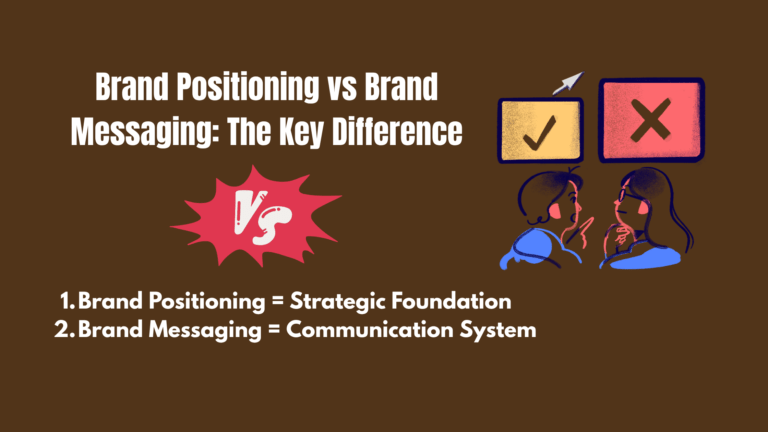
Brand Positioning = Strategic Foundation
Positioning determines how you want people to perceive your brand.
It focuses on:
- Market differentiation
- Audience relevance
- Competitive advantage
- Brand identity
Brand Messaging = Communication System
Messaging determines how you express your positioning.
It focuses on:
- Language
- Tone of voice
- Customer communication
- Content creation
A simple analogy:
Positioning is the destination.
Messaging is the vehicle that takes people there.
Section – 06
How Positioning and Messaging Work Together
Many businesses mistakenly treat positioning and messaging as separate activities.
In reality, they depend on each other.
Strong positioning creates clarity.
Strong messaging communicates that clarity consistently.
For example:
A personal branding coach may position themselves as:
“The personal branding strategist for introverted professionals.”
Their messaging might include:
- Build authority without becoming a social media celebrity
- Grow your reputation through expertise, not noise
- Personal branding for professionals who value depth over attention
Every message reinforces the positioning.
This consistency builds trust.
Section – 07
Real Brand Case Study: Apple
One of the strongest examples of positioning and messaging alignment is Apple.
Apple’s Positioning
Apple positions itself around:
- Simplicity
- Innovation
- Premium user experience
- Creative empowerment
Apple’s Messaging
Its communication consistently reflects these values through phrases such as:
- Think Different
- Powerful. Simple.
- Creativity for everyone
Apple’s marketing rarely focuses solely on technical specifications.
Instead, it communicates how technology improves people’s lives.
This alignment between positioning and messaging has helped Apple become one of the most recognizable brands in the world.
Section – 08
Common Mistakes Businesses Make
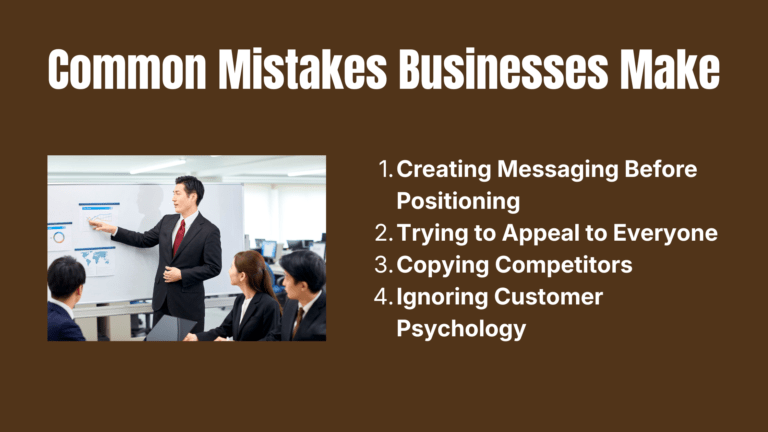
Creating Messaging Before Positioning
Many startups start writing content before defining their market position.
This often results in generic messaging such as:
- We provide quality services
- Customer satisfaction is our priority
- We deliver innovative solutions
These phrases fail because they lack strategic positioning.
Trying to Appeal to Everyone
Brands that attempt to target everyone usually connect with no one.
Specificity improves memorability.
Copying Competitors
Many businesses unknowingly repeat the same messaging patterns as competitors.
This reduces differentiation and weakens brand identity.
Ignoring Customer Psychology
Effective positioning requires understanding:
- Customer fears
- Motivations
- Aspirations
- Identity
People connect emotionally before they evaluate logically.
Section – 09
Why This Matters for Pakistani Businesses
Pakistan’s startup ecosystem is expanding rapidly.
From freelancers and educational platforms to SaaS startups and e-commerce brands, competition continues to grow.
However, many local businesses still rely on generic marketing language.
This creates an opportunity.
Brands that develop:
- Clear positioning
- Consistent messaging
- Audience-focused communication
Can stand out even without large advertising budgets.
For Pakistani startups, differentiation is often a stronger advantage than spending more on marketing.
Section – 10
Building Better Positioning and Messaging
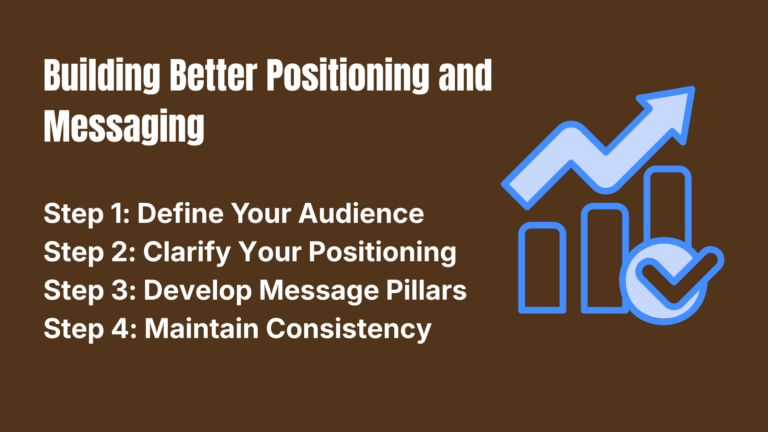
Follow these steps:
Step 1: Define Your Audience
Identify:
- Who you help
- What problem they face
- What outcome they want
Step 2: Clarify Your Positioning
Answer:
- What makes us different?
- Why should customers choose us?
- What unique perspective do we offer?
Step 3: Develop Messaging Pillars
Create three to five key themes you want every piece of content to reinforce.
Step 4: Maintain Consistency
Your website, blog, LinkedIn posts, and marketing materials should communicate the same core ideas.
Consistency strengthens trust and recognition.
Section – 11
Frequently Asked Questions
What is the difference between brand messaging and brand positioning?
Brand positioning defines how a brand wants to be perceived, while brand messaging communicates that position through language and content.
Which comes first: positioning or messaging?
Positioning should always come first because messaging is built on top of the strategic foundation positioning provides.
Can a business have good messaging but poor positioning?
Yes. Many businesses create attractive content but fail to communicate a unique market position, making their messaging less effective.
Why is brand positioning important for startups?
Strong positioning helps startups differentiate themselves, attract the right customers, and build trust more quickly.
How often should brand messaging be updated?
Messaging can evolve as customer needs change, but it should remain aligned with the brand’s core positioning.
Does brand positioning affect SEO?
Yes. Clear positioning improves topical authority, content relevance, user engagement, and overall search visibility.
Conclusion
Brand messaging and brand positioning are not competing concepts. They are two parts of the same system.
Positioning defines the strategic space your brand owns in the minds of customers.
Messaging communicates that position consistently across every customer touchpoint.
Without positioning, messaging becomes generic.
Without messaging, positioning remains invisible.
For startups, freelancers, and personal brands in Pakistan and around the world, mastering both creates a significant advantage in an increasingly crowded digital marketplace.
As search engines and consumers continue prioritizing trust, clarity, and expertise, brands that communicate a clear position through consistent messaging will be better equipped to build authority, attract loyal audiences, and sustain long-term growth.
The future belongs to brands that are not only visible but also memorable. And memorability starts with knowing exactly who you are, who you serve, and how you communicate that value.