In today’s digital-first world, founders are no longer operating behind the scenes.
Customers want to know who they are buying from.
Investors want to understand the people behind the business.
Employees want to connect with leadership.
As a result, founder branding has become one of the most powerful business growth tools available.
Yet many founders face the same concern:
“How do I build a personal brand without sounding fake?”
It is a valid question.
Scroll through social media and you will find endless examples of founders sharing generic motivational quotes, exaggerated success stories, and carefully curated lifestyles that feel disconnected from reality.
The problem is not personal branding itself.
The problem is performative branding.
The founders who build lasting trust are not the loudest. They are often the clearest.
This article explores how founders can position themselves authentically, build authority, and attract opportunities without becoming another online personality trying to manufacture credibility.
Table of Contents
ToggleSection – 02
Why Founder Positioning Matters More Than Ever
Modern consumers trust people more than companies.
According to multiple global trust studies, individuals consistently rank among the most trusted sources of information compared to traditional corporate advertising.
This shift has created a major opportunity for founders.
People increasingly buy from brands when they trust the people behind them.
For startups especially, founder positioning can influence:
- Customer trust
- Investor confidence
- Partnership opportunities
- Recruitment success
- Brand recognition
In Pakistan’s growing startup ecosystem, founder visibility is becoming increasingly important as competition continues to expand across technology, education, freelancing, and digital services.
Founders who communicate clearly often gain attention faster than businesses that rely only on traditional marketing.
Section – 03
What Founder Positioning Actually Means
Founder positioning is the strategic process of defining how you want people to perceive you as a business leader.
It answers questions such as:
- What expertise am I known for?
- What unique perspective do I bring?
- What audience do I help?
- What values guide my work?
Founder positioning is not about becoming famous.
It is about becoming memorable and trusted within a specific area of expertise.
Strong founder positioning helps people immediately understand:
- Who you are
- What you stand for
- Why your insights matter
Section – 04
Why Many Founders Sound Fake Online
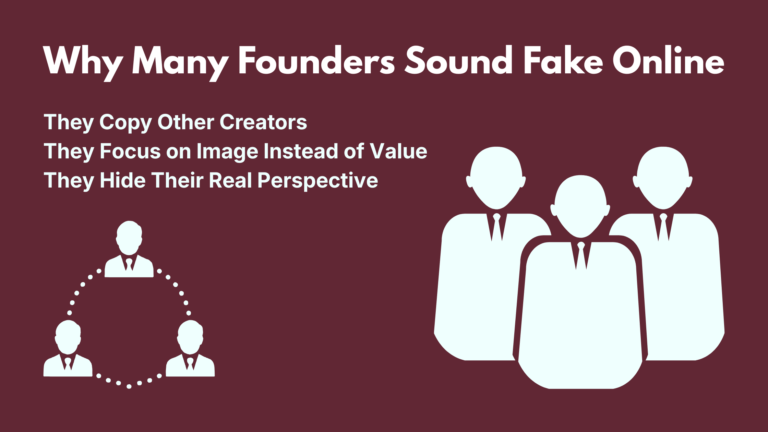
They Copy Other Creators
One of the biggest mistakes founders make is copying content styles from influencers, entrepreneurs, or thought leaders.
As a result, their communication begins to sound generic.
You often see repetitive phrases such as:
- Hustle harder
- Never quit
- Success is a mindset
- Grind every day
While these statements may attract attention, they rarely communicate expertise.
Trust is built through insight, not imitation.
They Focus on Image Instead of Value
Many founders spend more time projecting success than sharing useful knowledge.
Audiences quickly recognize this pattern.
People are far more interested in learning from genuine experiences than watching someone constantly advertise their achievements.
They Hide Their Real Perspective
Many founders worry that expressing strong opinions will alienate people.
As a result, their content becomes overly safe and forgettable.
The reality is that memorable brands often have clear perspectives.
Being authentic does not require being controversial.
It requires being honest about what you believe.
Section – 05
The Difference Between Authenticity and Oversharing
A common misconception is that authenticity means sharing every personal detail.
It does not.
Authenticity means consistency between what you say and what you actually believe.
Oversharing often creates distraction.
Authenticity creates trust.
For example:
A founder discussing lessons learned from a failed product launch provides valuable transparency.
A founder sharing deeply personal stories unrelated to the audience’s needs may attract attention but not necessarily command authority.
The goal is relevance.
Your audience wants insight, not a public diary.
Section – 06
The Authentic Founder Positioning Framework
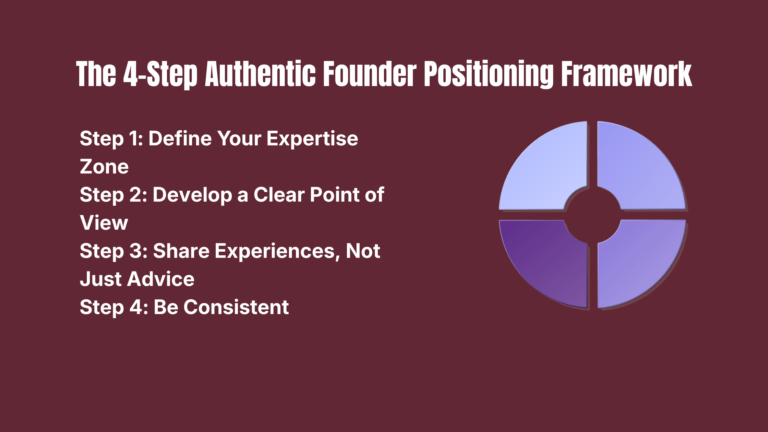
Step 1: Define Your Expertise Zone
Identify the intersection of:
- Experience
- Knowledge
- Audience needs
Ask yourself:
What problem do I consistently help people solve?
Examples:
- Brand messaging
- Startup growth
- Educational technology
- Product design
- Leadership development
The narrower your expertise zone, the easier it becomes for people to remember you.
Step 2: Develop a Clear Point of View
Strong founder brands are known for ideas.
Ask:
- What industry assumptions do I challenge?
- What do I believe most people misunderstand?
- What lessWhat lessons have shaped my approach?
For example:
Instead of saying:
“Content marketing is important.”
A founder might say:
“Most startup content fails because it focuses on information instead of trust.”
This perspective creates differentiation.
Step 3: Share Experiences, Not Just Advice
One of the strongest signals of credibility is experience.
Google’s E-E-A-T framework specifically values demonstrated experience.
Rather than giving generic advice, explain:
- What happened
- What you learned
- What others can apply
Experience creates authority because it cannot easily be copied.
Step 4: Be Consistent
Trust develops through repetition.
Your website, social media, interviews, and content should reinforce similar themes.
Consistency helps people associate your name with specific expertise.
Over time, this becomes your reputation.
Section – 07
Real Brand Case Study: Sara Blakely
Sara Blakely built one of the strongest founder brands by embracing authenticity.
Rather than presenting herself as a flawless entrepreneur, she regularly shared:
- Business failures
- Early challenges
- Learning experiences
- Personal growth stories
Her communication style felt relatable and human.
This transparency strengthened trust while reinforcing her expertise.
As a result, her personal brand became closely linked to her company’s success.
The lesson is simple:
People trust founders who demonstrate real experience more than those who attempt to project perfection.
Section – 08
Founder Positioning in Pakistan
Pakistan’s entrepreneurial ecosystem is evolving rapidly.
More founders are building businesses through:
- SaaS
- E-commerce
- Education
- Freelancing
- Consulting
- Digital products
However, many founder profiles still look remarkably similar.
Most communicate:
- Company updates
- Product announcements
- Achievement posts
Very few consistently share:
- Lessons learned
- Industry insights
- Customer understanding
- Strategic thinking
This creates a major opportunity.
Founders who focus on education rather than self-promotion often stand out more effectively.
Section – 09
Content Ideas That Build Founder Authority
Consider publishing content around:
Industry Insights
Explain trends and opportunities within your field.
Lessons Learned
Share experiences from successes and failures.
Customer Observations
Discuss common challenges your audience faces.
Frameworks and Processes
Show how you solve problems.
Contrarian Perspectives
Challenge assumptions thoughtfully.
These content formats position founders as educators rather than promoters.
Section – 10
Frequently Asked Questions
What is founder positioning?
Founder positioning is the process of shaping how people perceive a founder’s expertise, values, and unique perspective within a market.
Why is founder positioning important?
It helps build trust, authority, and visibility while creating stronger connections with customers, investors, and partners.
How can founders build a personal brand authentically?
By sharing real experiences, providing valuable insights, maintaining consistency, and focusing on helping their audience.
Does founder branding help startups grow?
Yes. Strong founder brands often increase trust, attract opportunities, and improve brand recognition.
Can introverted founders build strong personal brands?
Absolutely. Effective founder positioning depends on clarity and expertise, not personality type.
What is the biggest founder branding mistake?
Trying to imitate successful creators instead of communicating genuine experiences and perspectives.
Conclusion
Founder positioning is not about becoming an influencer.
It is about becoming a trusted voice within a specific area of expertise.
The founders who earn lasting trust are rarely the ones chasing attention. They are the ones consistently sharing useful insights, real experiences, and clear perspectives.
For founders in Pakistan and around the world, this creates a significant opportunity.
As digital markets become increasingly crowded, authentic positioning will become a stronger competitive advantage than visibility alone.
People trust expertise.
People remember clarity.
And in a world full of carefully manufactured personal brands, genuine experience remains one of the most powerful differentiators a founder can have.