Most brand messaging doesn’t fail because it lacks effort.
It fails because it lacks connection.
You explain your services. You list benefits. You try to sound “valuable.”
But your audience doesn’t feel anything… so they don’t act.
Here’s the uncomfortable truth:
People don’t trust what they understand. They trust what they feel.
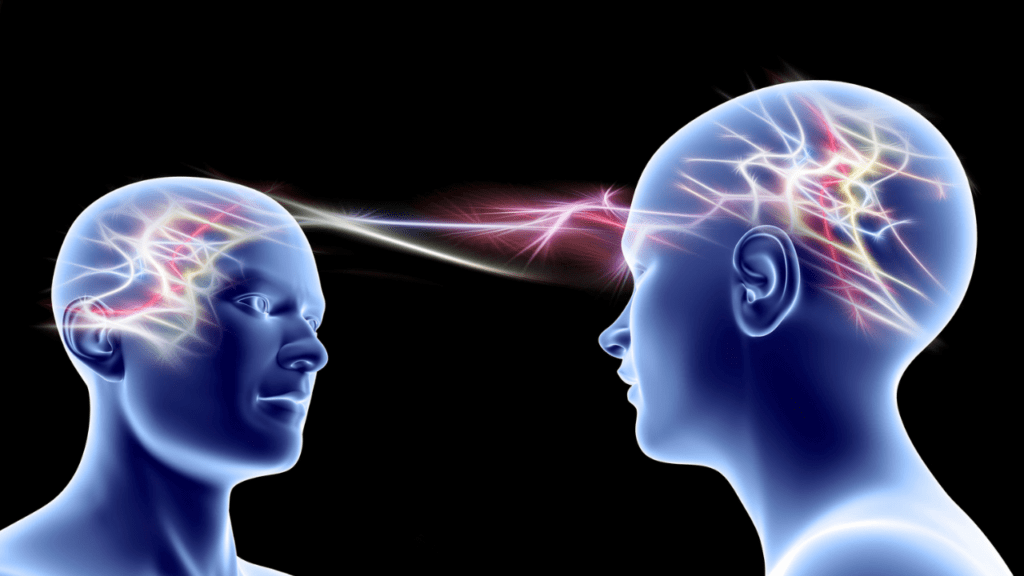
This is where mirror neurons change everything.
Table of Contents
ToggleSection – 02
What Are Mirror Neurons?
Mirror neurons are brain cells that activate when we:
- experience something ourselves
- or watch someone else experience it
In simple terms:
Your brain doesn’t just process stories. It lives them.
When your audience reads a story:
- They imagine themselves in it
- They feel the emotions
- They subconsciously connect with the outcome
That’s why storytelling isn’t optional in brand messaging. It’s neurological.
Section – 03
Why Your Brand Messaging Isn’t Converting (The Real Problem)
Let’s call it out clearly.
Your messaging likely:
- explains instead of connects
- lists instead of shows
- informs but doesn’t engage
And your audience?
- scrolls
- gets distracted
- leaves
Not because they’re not interested.
Because nothing pulled them in emotionally.
Section – 04
Why Stories Trigger Trust Instantly
Traditional messaging says:
- “We offer quality services.”
- “We help you grow.”
Story-driven messaging shows:
- what the struggle looks like
- what the journey feels like
- what the result actually means
What happens in the brain:
- Mirror neurons activate
- Emotional engagement increases
- Trust builds without force
For educational platforms, this is critical.
Students don’t just want information.
They want to see who they can become.
Related: Emotional Granularity in Messaging Converts Faster than Explanation
Section – 05
The Science Behind Storytelling and Trust
Research in neuroscience shows:
- Stories activate multiple brain regions
- Emotional content improves memory retention
- People recall stories far more than facts
When you only share information:
The brain processes it logically
When you share a story:
The brain experiences it
That difference?
It’s the gap between being ignored and being remembered.
Section – 06
Case Study: Airbnb’s Story-Driven Messaging
Airbnb doesn’t sell bookings.
It sells experiences.
Instead of focusing on features, it highlights:
- real traveler journeys
- host stories
- emotional connections
Why this works:
- People imagine themselves in those moments
- Trust builds naturally
- The brand feels human
This is mirror neuron activation in action.
Section – 07
How to Apply Mirror Neurons in Your Messaging
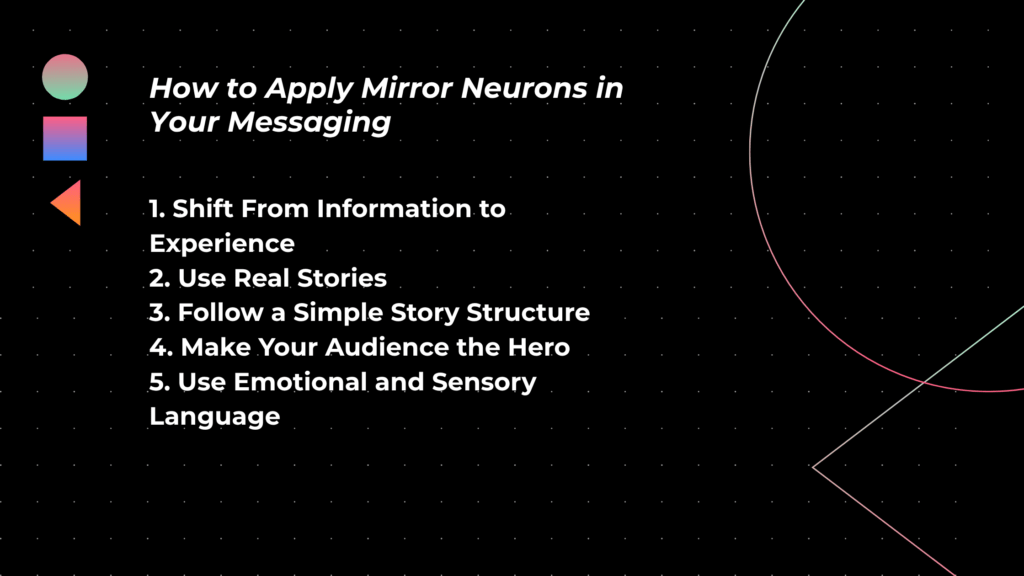
1. Shift From Information to Experience
Don’t just say what you do.
Show what it feels like.
Instead of:
“We offer online courses”
Say:
“Gain skills that help you land your first remote job”
2. Use Real Stories
Share:
- client transformations
- student journeys
- before-and-after scenarios
Specificity builds belief.
3. Follow a Simple Story Structure
Use:
Problem → Journey → Transformation
This aligns perfectly with how the brain processes meaning.
4. Make Your Audience the Hero
Your brand is not the hero.
Your audience is.
You are the guide.
5. Use Emotional and Sensory Language
Instead of:
“Improve your communication skills.”
Say:
“Speak confidently in meetings without second-guessing yourself.”
Also see: Cognitive Load in Brand Messaging
Section – 08
Data Insight: Why Storytelling Works
Studies show:
- Story-based content can increase engagement up to 22x
- Emotional content improves recall
- People trust relatable experiences more than claims
For your website, that means:
- longer time on page
- better engagement
- higher chances of conversion
Section – 09
How to Turn This Into Actual Results (Not Just Theory)
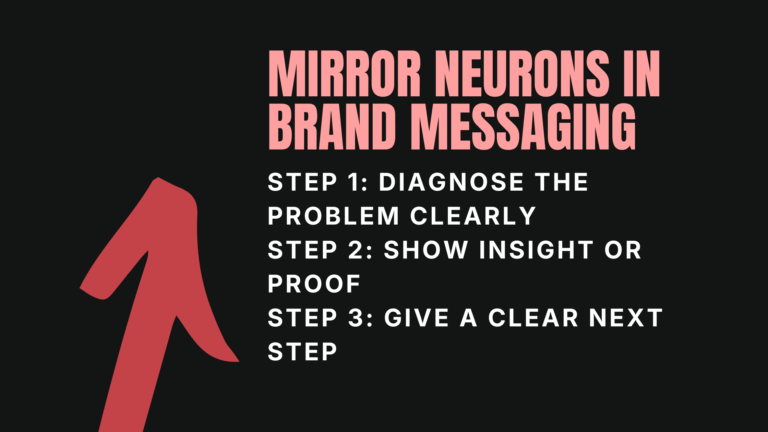
Let’s not pretend content alone pays bills.
Here’s how to make this work:
Step 1: Diagnose the Problem Clearly
Your audience should read your content and think:
“This is exactly what I’m struggling with.”
Call it out directly:
- unclear messaging
- low engagement
- no conversions
Step 2: Show Insight or Proof
Don’t just explain. Demonstrate.
Use:
- examples
- mini breakdowns
- case studies
This builds authority fast.
Step 3: Give a Clear Next Step
This is where most people fail.
If your blog ends without direction, you lose the lead.
Give them something like:
- a checklist
- a free audit
- a guide
Section – 10
If Your Messaging Isn’t Converting, Start Here
If you’re reading this and thinking:
“My content is good, but it’s not bringing clients”
You don’t need more content.
You need better messaging.
👉 Download the “Brand Messaging Clarity Checklist”
Fix the gaps in your messaging and make your content actually convert.
Section – 11
People Also Ask (FAQs)
What are mirror neurons in marketing?
Mirror neurons help people emotionally connect with experiences, making storytelling more effective in marketing.
Why does storytelling build trust?
Because it allows audiences to relate, imagine, and emotionally engage with the message.
How can I improve my brand messaging?
Focus on clarity, real stories, and emotional connection instead of just information.
Does storytelling improve conversions?
Yes. Emotional engagement increases trust, which directly impacts conversions.
What type of stories work best?
Real-life transformations, relatable struggles, and clear outcomes.
Conclusion: People Trust What They Experience
Your audience doesn’t need more information.
They need:
- clarity
- connection
- relatability
Mirror neurons explain why storytelling works, but the strategy is simple:
- Make people see themselves in your message
- Make them feel the outcome
- Show them what’s possible
Because in the end,
People don’t act on logic alone. They act on what feels real.
And if your message doesn’t feel real, it won’t convert.
Pingback: Emotional Granularity in Messaging: Beyond Pain Points