Many brands believe they have a messaging problem.
In reality, they have an alignment problem.
The founder shows up one way.
The brand communicates in another way.
And the audience is left trying to figure out:
- who they are listening to
- what the brand actually stands for
- whether they can trust it
This disconnect between founder personality and brand voice is one of the most overlooked issues in brand messaging today.
For educational platforms in Pakistan and global markets, where trust is critical, this misalignment can directly impact engagement, credibility, and conversions.
Table of Contents
ToggleSection – 02
What Is Founder Personality vs Brand Voice?
Founder Personality
This is how the founder naturally communicates:
- tone
- beliefs
- communication style
- personal perspective
Brand Voice
This is how the business communicates publicly:
- website content
- marketing materials
- social media
- email communication
The Problem
When these two are not aligned:
- the brand feels inconsistent
- The messaging feels forced
- trust starts to weaken
Section – 03
Why Alignment Matters in Brand Messaging

Consistency builds trust.
When people experience the same tone and message across:
- website
- content
- founder presence
they feel:
- clarity
- familiarity
- confidence
But when alignment fails:
- the brand feels disconnected
- the message feels inauthentic
- users hesitate to engage
Related: Cognitive Load in Brand Messaging: Why Simplicity Wins
Section – 04
Common Signs of Misalignment
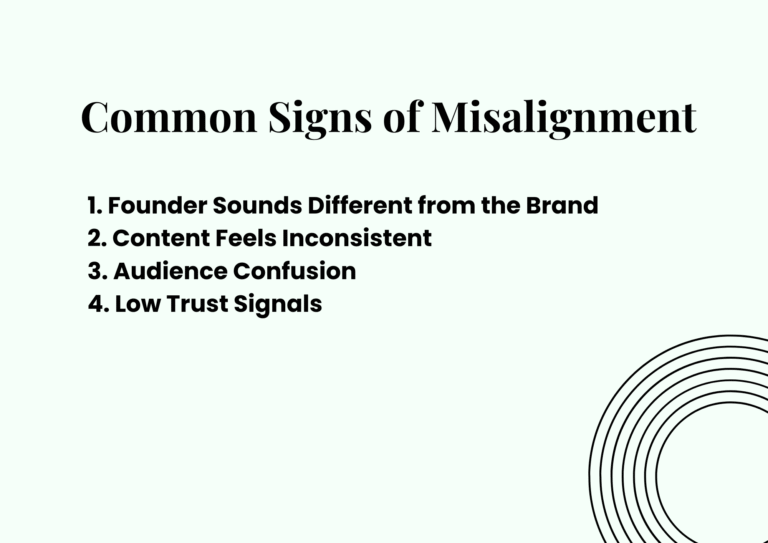
1. Founder Sounds Different from the Brand
The founder is:
- direct and insightful
The brand is:
- generic and corporate
2. Content Feels Inconsistent
Website tone ≠ social media tone
3. Audience Confusion
Users don’t clearly understand:
- what the brand stands for
- what makes it different
4. Low Trust Signals
Even with good content, engagement stays low.
Related: Explore how Clarity Illusion becomes a barrier in Effective Brand Messaging
Section – 05
Why This Happens
1. Over-Professionalization
Brands try too hard to sound “professional” and lose authenticity.
2. Copying Competitors
Instead of reflecting the founder’s voice, brands imitate others.
3. Lack of Messaging Strategy
No clear framework connecting personality to communication.
4. Fear of Being Personal
Founders hesitate to express their real perspective publicly.
Section – 06
The Psychology Behind Alignment and Trust
People trust consistency.
In psychology, repeated exposure to a consistent message builds:
- familiarity
- credibility
- emotional connection
When tone and messaging shift:
- cognitive friction increases
- trust decreases
This aligns with the concept of processing fluency:
The easier something is to recognize and understand, the more trustworthy it feels.
Read Also: Mirror Neurons in Brand Messaging, Stories Build Trust
Section – 07
Case Study: Elon Musk and Tesla’s Brand Voice
One of the most visible examples of alignment is Elon Musk and Tesla.
Founder Personality
- bold
- direct
- unconventional
Brand Voice
- innovative
- forward-thinking
- confident
Why It Works
- The founder’s communication reinforces the brand’s identity
- Messaging feels consistent across platforms
- The brand reflects a clear personality
Caution
Alignment does not mean imitation.
Not every founder should become the brand.
The goal is coherence, not overexposure.
Section – 08
Impact on Educational Platforms in Pakistan
In Pakistan’s growing digital education space:
- trust is a major barrier
- credibility determines engagement
When founder personality and brand voice align:
- students feel more connected
- messaging feels authentic
- learning platforms gain credibility
For global audiences, this alignment ensures:
- consistent communication
- stronger brand recognition
- scalable trust
Section – 09
How to Align Founder Personality with Brand Voice
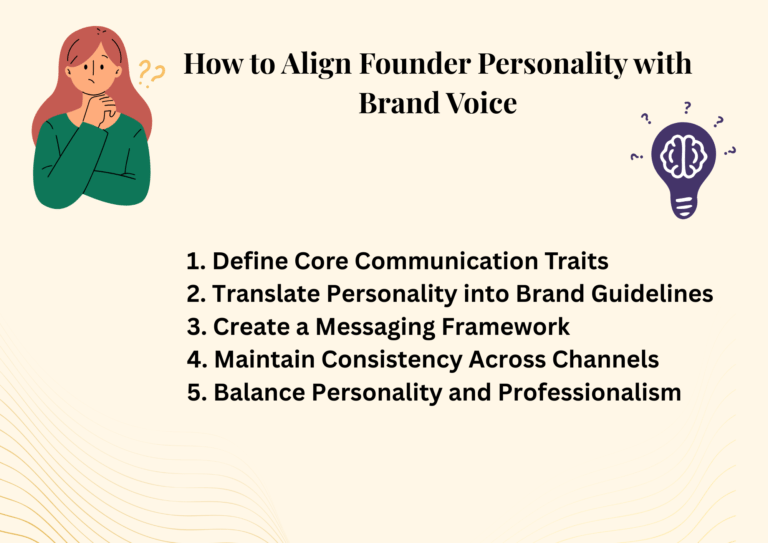
1. Define Core Communication Traits
Identify:
- how the founder naturally communicates
- what tone feels authentic
Example:
- simple
- direct
- insightful
2. Translate Personality into Brand Guidelines
Turn traits into:
- tone rules
- messaging style
- content structure
3. Create a Messaging Framework
Define:
- core message
- audience focus
- communication style
4. Maintain Consistency Across Channels
Your:
- website
- blog
- social media
should reflect the same voice.
5. Balance Personality and Professionalism
You don’t need to:
- overshare
- become overly casual
You need to:
- stay authentic
- remain clear and credible
Section – 10
Data-Driven Insight: Consistency Builds Trust
Research in branding and user experience shows:
- Consistent messaging increases brand recognition
- Clear tone improves user engagement
- Familiar communication builds long-term trust
For educational websites, this leads to:
- higher enrollment rates
- stronger audience loyalty
- improved credibility
Section – 11
Content Strategy for Pakistan and a Global Audience
1. Use Clear, Simple Language
Ensure accessibility for diverse audiences.
2. Reflect Real Experiences
Connect messaging with:
- student challenges
- learning goals
- career aspirations
3. Align Messaging with Audience Expectations
Avoid overly complex or abstract communication.
4. Build Trust Through Consistency
Aligning voice and personality supports Google’s E-E-A-T principles:
- Experience
- Expertise
- Authoritativeness
- Trustworthiness
Section – 12
People Also Ask (FAQs)
What is brand voice in marketing?
Brand voice is the consistent tone and style a brand uses to communicate with its audience.
Why is the founder’s personality important in branding?
It shapes authenticity and influences how the brand is perceived by the audience.
What happens when brand voice is inconsistent?
It creates confusion, reduces trust, and weakens brand identity.
How can I align my brand voice with my personality?
By defining communication traits and applying them consistently across all content.
Does alignment affect conversions?
Yes. Consistent and authentic messaging builds trust, which improves conversions.
Should every founder be the face of the brand?
Not necessarily. Alignment is important, but visibility depends on strategy.
Conclusion: Alignment Builds Authenticity
The gap between founder personality and brand voice is subtle but powerful.
When alignment fails:
- messaging feels disconnected
- trust weakens
- engagement drops
When alignment works:
- communication becomes clear
- the brand feels authentic
- trust builds naturally
For educational platforms in Pakistan and beyond, this alignment is not optional.
It is a strategic advantage.
As digital audiences become more aware and selective,
brands that communicate consistently and authentically will stand out.
Because in the end:
People don’t just trust what you say.
They trust the consistency with which you say it.
Pingback: Mirror Neurons in Brand Messaging: Stories Build Trust - The Brand Clarity GuideMirror Neurons in Brand Messaging: Stories Build Trust